Smart Meter Billing in Kenya: Mobile Payments for Local Businesses
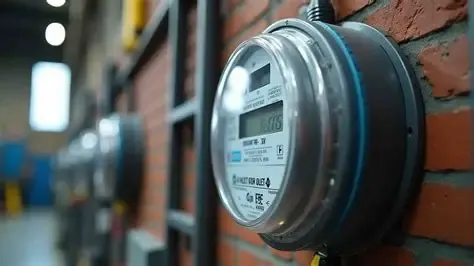
Kenya’s utilities and energy businesses are moving from paper bills and manual readings to meters that report usage remotely and take payment before power, gas or access is delivered. Electricity is the largest example. Gas, pay-as-you-go solar and smaller connected equipment are following the same path, and most of them collect through M-Pesa.
There is no official count of smart metering businesses in Kenya, so this article doesn’t claim one. What the public record does show is a set of large, measurable moves: a national utility buying smart meters and converting customers to prepaid, a court-ordered meter procurement, a pay-as-you-go gas launch, and a rapid rise in pay-as-you-go solar financing. This guide looks at those moves, what they mean for smart meter billing, and how mobile payments fit in. It’s written for utilities, energy startups, gas and solar operators, and local businesses that run metered equipment.
Electricity: the scale of the shift
Kenya Power is the clearest signal. It began rolling out smart meters for prepaid domestic customers in Nairobi and other urban areas in 2025, with the stated aims of improving efficiency and reducing power theft. The same report says the utility plans to reach over 1 million prepaid customers with smart meters by the end of 2026. That is a plan, not a completed figure, so check the latest status before quoting it.
The utility’s wider smart metering system is already operating for large power, SME and selected domestic customers. Smart meters support two-way communication, which allows remote meter reading as well as remote disconnection and reconnection. Those last two features matter most for billing, because they turn payment status into a power decision without a field visit.
The scale of the need is also visible in the courts. In January 2026, the High Court ordered Kenya Power to execute a Sh6 billion smart meters tender with a Chinese company after the contract had been cancelled, and the utility told the court it urgently needed 420,000 electricity meters. In the same period, it also invited bids for prepaid meters and circuit breakers, which points to continued demand rather than a single project.
Rural customers are next. Kenya Power’s annual report, published in early 2024, said existing postpaid meters in rural areas would be converted to prepaid over three years, with a longer-term move to smart metering. At the time, about 2.1 million customers were on postpaid billing and 6.8 million on prepaid. For a utility of that size, the change in how payments are collected is large.
The prepaid base is already big. In July 2024, Kenya Power reported that 4.2 million prepaid customers had updated their token meters as part of a nationwide exercise. That exercise updated meter software rather than installing new hardware, but it shows how many households already buy power in small amounts.
Why the mobile money route matters
Prepaid electricity in Kenya already runs on M-Pesa. Customers open the M-Pesa menu, select Lipa na M-Pesa, choose Pay Bill, and enter Kenya Power’s business number 888880 with their meter number as the account number. That flow works because the meter number is a fixed reference that stays with the customer.
This is the pattern most smart metering businesses now copy. A customer pays a small amount, and the payment is tied to a meter, a device or a subscriber reference. The difference is who handles the credit. For a utility, the meter receives the token. For a gas or solar business, the device unlocks or credits itself after the payment is confirmed.
For a smaller operator, the Paybill route has a weakness: it depends on the customer typing the account number correctly. A wrong meter number sends money to the wrong place, and the business has to fix it. For that reason, prompt-based collection, where the customer approves a payment on their own phone without typing an account reference, is often the better fit for smaller businesses. Our article on M-Pesa Paybill vs STK Push for ISPs sets out the trade-offs in more detail.
Gas: pay-as-you-go is arriving
Gas is the newer field. Local distributor Safari Supa Gas partnered with PayGo Energy to launch what they described as Kenya’s first pay-as-you-go LPG service. The device works much like an electricity meter: a cylinder smart meter reports household gas consumption in real time, and each meter has a unique ID that customers use to pay for gas through M-Pesa.
The customer result is the important part. Customers are charged only for the gas they use, much as they pay for electricity tokens. The same report says the operator had over 400 customers on the service, with around 90% retention. The launch report is undated, so check its date before citing it as current.
Gas billing has a different risk profile from electricity. A cylinder has a physical limit, and the operator needs to know how much gas is left and when the next payment is due. Real-time consumption data is what makes that possible.
Solar: pay-as-you-go financing at scale
Pay-as-you-go solar is the largest consumer-facing example. The model spreads the cost of a solar system across weekly or monthly payments, and it depends on mobile money. Industry research notes that pay-as-you-go models have made it possible for households to buy small systems through mobile money in weekly or monthly instalments.
The financing behind the sector is significant. In July 2025, Sun King closed a USD 156 million local-currency securitisation in Kenya, funded by banks including Absa, Citi, Co-operative Bank, KCB and Stanbic. A deal of that size depends on reliable collections, because the lenders are funding a stream of small customer payments.
The same pattern applies at smaller scale. Mini-grids and decentralised systems use flexible payments to reach customers who can’t pay upfront. For an operator, that makes the collection routine the core of the business, not a back-office task. Our guide to M-Pesa payment collections for PAYG solar businesses covers that routine step by step.
Water, vending and connected equipment
Water meters, milk ATMs, vending machines and similar devices follow the same logic: a customer pays a small amount, and the equipment responds. Public data on this segment in Kenya is thinner than for electricity and gas, so this article avoids market-size claims for it. The operating principle is the same as for other metered equipment. The device should act only on a confirmed payment, and each payment should match one device and one sale.
For the detailed setup, our guides on cashless payment for vending machines and M2M payments across M-Pesa, Airtel Money and MTN cover the flow from the customer’s prompt to the device response.
What the billing system has to do
Across all these businesses, the billing layer has the same jobs:
- Identify the meter, device or subscriber. Every payment needs a reference that ties it to one meter, cylinder, device or account.
- Record the amount and period. A payment should show what it bought, such as units of power, days of solar access, or a volume of gas.
- Respond only to confirmed payments. The device should credit or unlock only when the payment is complete.
- Handle repeats safely. Payment messages can repeat or arrive out of order, so one payment must never credit a device twice.
- Reconcile against the mobile money record. Totals by device, by site and by network should match the statement each day.
A utility with millions of meters can build this in-house. A smaller gas, solar or equipment operator usually needs the payment layer from a provider, and builds the device logic on top. Our guide to mobile payment integration for IoT in Kenya explains how to connect the two.
Where the risks sit
The public record points to a few recurring problems.
Wrong meter numbers. Kenya Power has published guidance on tokens sent to the wrong meter number and advises customers to save the correct one. A prompt-based flow avoids most of this, because the customer doesn’t type the number.
Meters that drift from the records. In April 2026, Kenya Power’s board chair said the utility could not account for over one million of its more than 10 million installed meters. Whatever the exact figure, the lesson for any operator is the same: the meter register and the billing record must agree, and a device that can’t be found can’t be billed.
Debt attached to the device. Resolving a “Stima Loan” debt on a prepaid meter inherited from a previous tenant is a common issue in Kenya, because Kenya Power attaches such debts to the meter rather than the person. For any metered business, a balance that follows the device, not the customer, needs a clear rule before launch.
Failed token loads. Customers who can’t load a token after a “Failed” message need a simple answer. The lesson for other operators is to tell the customer what happened and what to do next, rather than leaving them to pay again.
Why M-Pesa fits smart metering
Most customers in these markets already use M-Pesa for small payments. A smart meter, gas cylinder or solar system is a monthly or daily purchase that customers can make on their phone without a card. The customer approves each payment, so there is no stored balance and no hidden charge.
For the operator, M-Pesa also provides a record. Each payment carries a receipt, which helps with customer questions and with reconciliation. Where a business shares revenue with a site owner, agent or financing partner, a split can divide each payment at the point it’s made. Our split payments infrastructure page explains how that works.
Where IntaSend fits
IntaSend provides the mobile money collection layer for smart metering and connected businesses. Each payment is collected through an M-Pesa prompt, and a webhook confirms the result to your system, so the meter, device or account can respond. Revenue can be split between parties where that arrangement applies. The meter hardware, the device platform, tariffs and customer service stay with your business.
For the wider setup, see our ISP and IoT solutions page and the coverage page for the payment rails live in each market. If you run metered equipment and want to talk through how collections could work, speak to the IntaSend team. You can also reach us on WhatsApp at +254 711 082 947, by email at [email protected], or by phone at +254 114 114 644.
Banking services provided by licensed partners.