How to Get Paid as an ISP in Kenya
Sep 21, 2026
Complete Payment Strategy Guide
Running an ISP in Kenya means managing hundreds of customers across different income levels, payment preferences, and reliability. Some prefer M-Pesa. Others want bank transfers. A few use cards. Getting paid reliably requires accepting multiple payment methods, implementing smart collection strategies, and using the right tools. This guide shows you exactly how successful ISPs in Kenya collect payments efficiently.
The ISP Payment Reality in Kenya
You're an ISP. You connect customers to broadband. Every month, you need to collect subscription payments from 100, 500, maybe 1,000+ customers.
Here's what you're probably facing:
Some customers pay on time. Others pay late. A few don't pay at all. You spend hours chasing payments via WhatsApp and phone calls. Some customers claim they already paid (they didn't). Some want payment plans. Some pay half, then disappear.
Meanwhile, you have expenses: landlord payments, equipment costs, employee salaries, licensing fees. If customers don't pay, you can't pay your bills.
The result? Cash flow problems. Growth stalls. You're stressed constantly about money.
The solution isn't complicated. It's strategic.
Why ISPs Struggle to Get Paid
Before we talk about solutions, let's understand the problem.
Customers Have Limited Payment Options
Many Kenyans don't have regular bank accounts. Card payments require infrastructure and fees. Informal payment methods (cash, M-Pesa via manual entry) are tedious and error-prone. When customers struggle to pay, they delay.
You Don't Track Payments Clearly
Without a unified system, payments are scattered everywhere. Some come via bank deposit, some via M-Pesa, some via cash. You manually track who paid and who didn't. This creates confusion and lost revenue.
Payment Reminders Are Ad-Hoc
You send WhatsApp reminders when you remember. Some customers get reminded; others don't. Bills pile up. Collection becomes chaotic.
You Accept Only One or Two Payment Methods
If you only accept bank transfer, customers with M-Pesa get frustrated. If you only accept M-Pesa, business customers want invoices they can claim as tax deductions. Limiting payment methods limits collection.
There's No Automated Follow-Up
You manually chase overdue payments. When you're busy, overdue accounts slip through the cracks. Bad debt accumulates.
The Multiple-Method Strategy: Why It Works
Successful ISPs in Kenya don't rely on one payment method. They accept multiple options and let customers choose what's easiest for them.
Here's why this works:
Removes Friction: Customer wants to pay? Give them options. They choose the easiest one for them.
Faster Collection: The easier you make payment, the faster customers pay.
Higher Completion Rate: A customer who can't pay via their preferred method often delays or forgets. Multiple options eliminate excuses.
Serves Different Customer Segments: Residential customers prefer M-Pesa. Business customers need invoices and bank transfers. NGOs need payment records for audits. Meet everyone where they are.
Reduces Bad Debt: When payment is frictionless, collection improves 40-60%.
Payment Methods Available to ISPs in Kenya
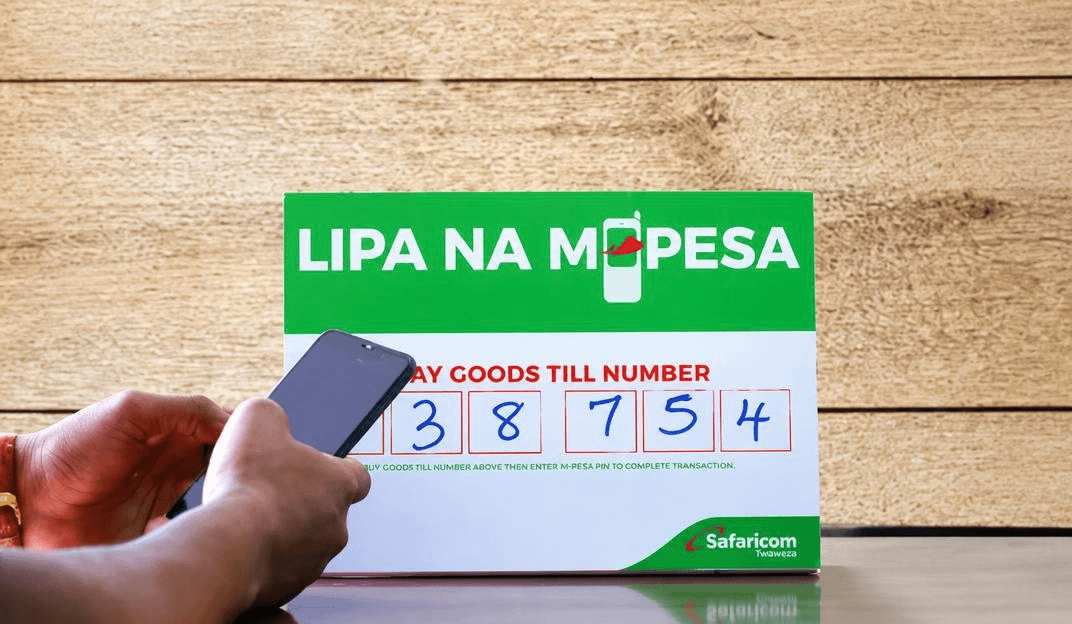
M-Pesa (One-Time & Bulk)
Best for: Residential customers, quick collections, informal businesses
How it works:
Customers pay via M-Pesa to your Paybill
Or you send automatic payment prompts (STK-Push) that appear on their phones
Payment hits your account instantly
Pros: Universal (98% of Kenyans have M-Pesa), instant, cheap fees (1-2%), no infrastructure needed
Cons: Has daily limits for some users (KES 300,000), customers sometimes make errors with manual entry
Cost: 1-2% per transaction when using a payment gateway
Bank Transfers (ACH/RTGS)
Best for: Business customers, corporate accounts, customers requiring invoices
How it works:
Customer transfers to your business bank account
Confirmation via bank statement
Takes 1-24 hours to settle
Pros: Professional, leaves audit trail, preferred by businesses, no daily limits
Cons: Takes longer than M-Pesa, higher fees (KES 2,000-5,000 per transfer), customers sometimes provide wrong details
Cost: KES 2,000-5,000 per transfer depending on your bank
Card Payments (Visa/Mastercard)
Best for: Online customers, international customers, customers without M-Pesa
How it works:
Customer enters card details on your payment page
Payment processes online
Settles within 2-3 days
Pros: Global reach, professional appearance, automated
Cons: Higher fees (2.5-4%), not preferred by most Kenyans, requires online payment gateway
Cost: 2.5-4% per transaction
Cash (In-Person)
Best for: Walk-in customers, local markets, customers building trust
How it works:
Customer pays in cash at your office
You issue receipt
Deposit to bank later
Pros: No technology needed, builds relationship, immediate payment
Cons: Unsafe, time-consuming to count/bank, creates gaps in record-keeping, high administrative overhead
Cost: Your time + bank deposit fees
Mobile Money Integration (MPESA API)
Best for: Automated billing, subscription collection, bulk payouts
How it works:
Your billing system connects to M-Pesa via API (through a gateway like IntaSend)
Customers receive automatic payment prompts
Payments settle instantly to your account
You get reports automatically
Pros: Fully automated, highest success rate (90%+), instant settlements, detailed reporting
Cons: Requires technical setup, per-transaction fees
Cost: 1-3% per transaction depending on platform
The Optimal ISP Payment Strategy
Here's how successful ISPs organize this:
Tier 1 (Primary): M-Pesa STK-Push via API
Fully automated
Instant payment
90%+ success rate
Lowest customer friction
Targets 70-80% of your customer base
Tier 2 (Secondary): Bank Transfer
For business customers
For customers with preferences
Backup for high-value payments
Professional invoices
Tier 3 (Tertiary): Cash
For local/walk-in customers
Relationship building
Last resort
What to avoid: Accepting multiple informal M-Pesa methods (manual Paybill entry, personal number requests) creates confusion. Stick to one M-Pesa method—ideally API-based STK-Push.
How Successful ISPs Collect Payments: The Process
Here's how a typical Nairobi ISP manages payments:
Month starts:
Customer's subscription is active
System calculates amount due (KES 2,500-5,000 depending on package)
Invoice is created in billing system
Day 25 (5 days before due date):
Payment reminder sent via WhatsApp: "Your bill of KES 3,000 is due on 30th. Pay now: [payment link]"
Link directs to multiple payment options
Day 28 (2 days before due date):
Optional: Send M-Pesa STK-Push prompt directly to customer's phone
Payment prompt appears automatically—customer just needs to enter PIN
~60-70% of customers pay at this point
Day 30 (Due date):
Final reminder sent: "Your bill is due today. [Payment link]"
Another STK-Push prompt for customers who didn't pay yet
Another ~20% pay
Day 31-35 (Overdue):
Red alert: "Your account is now 1-5 days overdue"
Follow-up call or WhatsApp for overdue accounts
Remaining customers either pay or negotiate plan
Day 36+ (Severely overdue):
Account flagged for suspension
Escalated follow-up
If 30+ days overdue, service may be suspended
Result: 95%+ of customers pay within 5 days of due date. Only 2-3% become bad debt.
Tools & Platforms That Help ISPs Collect Payments
For Billing + Payments:
IntaSend: Handles M-Pesa (STK-Push, Paybill), bank transfers, invoicing. Specifically designed for recurring billing.
Pesapal: Payment gateway accepting M-Pesa, cards, bank transfers. Good for ISPs wanting multiple methods.
Flutterwave: Payment aggregation. Accepts M-Pesa, cards, bank transfers. Higher fees.
For Billing System Integration:
Mikrotik (CHR): ISP management tool. Integrates with payment gateways via API.
UniFi: Network management. Can integrate with external billing systems.
Custom Billing: Many ISPs build custom systems that integrate directly with payment gateways.
For Tracking & Reconciliation:
Google Sheets + Apps Script: Free automation for small ISPs (<50 customers)
Excel + VBA: Tracking payments, automating reminders
Zapier: Connecting billing system to payment gateway to accounting
For WhatsApp Reminders:
Twilio: Programmable SMS/WhatsApp
WhatsApp Business API: Direct WhatsApp integration for notifications
Step-by-Step: Setting Up Your ISP Payment System
Step 1: Choose Your Primary Payment Method
Decision: Will you start with M-Pesa STK-Push, bank transfers, or both?
Recommendation: Start with M-Pesa STK-Push (highest adoption, fastest collection) + Bank Transfer (for businesses and backup).
Step 2: Select a Payment Gateway
Research providers that support:
M-Pesa STK-Push (automatic prompts)
Bank transfer collection
API integration with your billing system
Automated reporting
IntaSend supports all of this.
Step 3: Integrate with Your Billing System
Work with your tech team (or hire someone) to:
Connect your billing system to the payment gateway via API
Configure automatic payment prompts on invoice creation or due date
Set up automatic reconciliation (matched payments to invoices)
Create payment status dashboards
Step 4: Set Up Automated Reminders
Configure your system to:
Send WhatsApp reminders 5 days before due date
Send SMS reminders 2 days before due date
Trigger STK-Push prompt on due date
Send overdue notices after 5 days
Step 5: Test with a Small Group
Start with 20-30 customers. Track:
How many pay via each method?
When do they pay (how many days after reminder)?
What's your success rate?
What issues arise?
Step 6: Optimize & Scale
Based on results, adjust:
Reminder timing
Message wording
Payment method availability
Follow-up strategy
Then roll out to all customers.
Common ISP Payment Mistakes (And How to Avoid Them)
Mistake 1: Only Accepting One Payment Method
Many ISPs only accept bank transfer or only M-Pesa. This limits who can pay easily.
Fix: Accept at least 2-3 methods. Let customers choose.
Mistake 2: Manual Tracking Instead of Automated
Tracking payments in a spreadsheet is error-prone and time-consuming.
Fix: Use a billing system with automated payment reconciliation. Connect it to your payment gateway.
Mistake 3: No Automated Reminders
You send reminders ad-hoc, so some customers get reminded and others don't.
Fix: Automate reminders. Set them to go out on specific dates.
Mistake 4: No Follow-Up System
Overdue accounts pile up. You manually chase them when you remember.
Fix: Create a tiered escalation: reminder → overdue notice → suspension warning → suspension.
Mistake 5: Accepting Cash Without Tracking
Cash payments create no audit trail. You lose track of who paid.
Fix: If accepting cash, create receipts and immediately log in your system.
Mistake 6: Manual M-Pesa Paybill Requests
Asking customers to manually enter Paybill details creates errors.
Fix: Use STK-Push (automatic prompts) instead. Customers just enter PIN.
Mistake 7: No Payment Records for Customers
Customers don't know when they paid or if they're overdue.
Fix: Send payment confirmations automatically. Provide customers portal or WhatsApp notifications showing payment status.
The Bottom Line
Getting paid as an ISP in Kenya isn't complicated—it's systematic.
Accept multiple payment methods. Automate reminders. Use a reliable payment platform. Track everything. Follow up on overdue accounts consistently.
Do this, and your collection rate jumps from 70-80% to 95%+. Your bad debt drops. Your cash flow becomes predictable. You can focus on growing your business instead of chasing payments.
The ISPs that struggle are the ones who accept only one method, send manual reminders, and chase payments ad-hoc. The ISPs that thrive are the ones with systems.
Ready to Implement a Smart Payment System?
IntaSend helps ISPs collect payments via M-Pesa (STK-Push), bank transfer, and provide complete billing automation.
Set Up M-Pesa STK-Push for Your ISP
Explore Multiple Payment Methods
Questions?
WhatsApp: +254 711 082 947
Email: support@intasend.com
Phone: +254 114 114 644