Why Failed Payments Hurt Conversion More Than Bad Ads
Jan 8, 2026
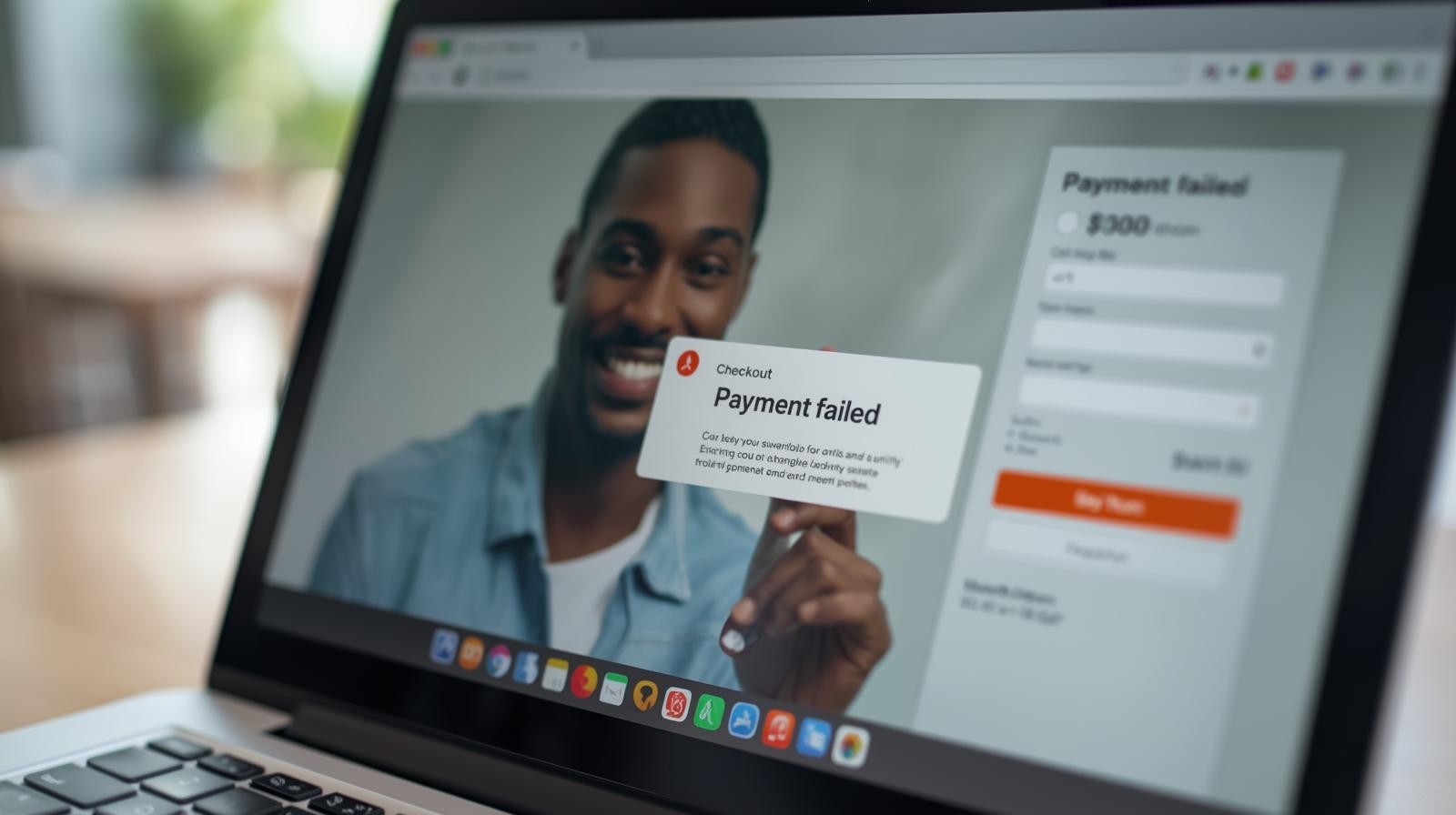
The Silent Conversion Killer
You're spending $10,000 monthly on Google Ads. Your click-through rate is strong. Landing page looks perfect. Checkout flow is optimized.
Then 11% of your transactions fail at payment processing.
Payment failures cost businesses $20.3 billion globally every year. That's not counting the customers who never return after a failed transaction.
Here's the reality: when a payment fails, 39% of customers abandon their cart completely. Only 25% try another payment method. The rest? Gone forever—despite loving your product, trusting your brand, and being ready to buy.
You can't advertise your way out of payment failures. This article breaks down why payment infrastructure is the most underestimated conversion factor in e-commerce.
The Real Cost of Payment Failures
The Numbers Don't Lie
Global payment failure rates average 5-10%, varying by region and payment method. For African e-commerce, this can spike even higher due to mobile money integration complexities and cross-border payment challenges.
What this means in practice:
If you're processing $100,000 monthly:
5% failure rate = $5,000 in lost revenue
10% failure rate = $10,000 in lost revenue
Annually: $60,000-$120,000 gone
But the real damage goes deeper.
False Declines: The $443 Billion Problem
Here's what most businesses don't realize: up to 70% of declined transactions are from legitimate customers, not fraud.
Banks and card issuers, being overly cautious, decline valid transactions to prevent fraud. The result? False declines cost businesses $443 billion annually—nearly 70 times more than actual fraud losses.
Your anti-fraud systems are costing you more than the fraud itself.
The Customer Lifetime Value Impact
One in five businesses report that failed payments directly impact customer lifetime value.
When a customer's payment fails:
39% abandon the purchase entirely
25% try another payment method
36% switch to a competitor
Even if they try again and succeed, trust is damaged. They're less likely to return for future purchases.
Why Payment Failures Hit Harder Than Bad Ads
1. Ad Spend Brings Traffic. Payment Infrastructure Converts It.
Scenario A: Great ads, poor payment infrastructure
10,000 visitors from ads
2% click to checkout (200 people)
10% payment failure rate (20 failed transactions)
Result: Lost 20 ready-to-buy customers despite successful ads
Scenario B: Decent ads, reliable payment infrastructure
8,000 visitors from ads
2% click to checkout (160 people)
2% payment failure rate (3 failed transactions)
Result: Converted 157 customers vs. 180 in Scenario A
Scenario B generates more revenue with less ad spend because payment infrastructure didn't kill conversions.
2. You Can Recover From Bad Ads. You Can't Recover From Lost Trust.
A bad ad wastes your budget but doesn't damage customer relationships. The user never engaged—no harm done.
A failed payment at checkout is different:
Customer trusted you enough to enter payment details
They wanted to buy
You failed to deliver
Trust is broken
Acquiring a new customer costs 5-25x more than retaining one. Failed payments turn ready buyers into acquisition costs.
3. Payment Problems Are Invisible Until It's Too Late
Bad ads show immediate signals:
Low click-through rates
High cost-per-click
Poor quality score
Easy to spot and fix
Payment failures are invisible:
Over 80% of businesses cite difficulty pinpointing causes of failed payments
Many businesses don't even track payment failure rates
By the time you notice, you've lost thousands of customers
Your analytics show "checkout abandonment" but don't distinguish between customers who changed their mind versus customers whose payments failed.
4. Mobile Payments Amplify the Problem
Mobile commerce accounts for 60.9% of e-commerce, but mobile payment failures are higher due to:
Smaller screens making card entry difficult
Network connectivity issues
Mobile keyboard errors
Authentication friction (3D Secure on mobile)
Your ad targeting mobile users perfectly, but your payment infrastructure isn't mobile-optimized? You're converting traffic into frustration, not revenue.
The African E-Commerce Payment Challenge
African markets face unique payment infrastructure challenges that multiply the impact of payment failures:
Mobile Money Complexity
Africa processed $1.105 trillion in mobile money transactions in 2024. For East African e-commerce, mobile money accounts for 60-70% of transactions.
The problem: Integrating M-Pesa, MTN Mobile Money, and Airtel Money requires different technical implementations. One misconfigured integration = failed payments for that entire user segment.
Cross-Border Payment Failures
Around 15% of cross-border payments fail due to currency conversion issues or incompatible payment methods.
For Pan-African businesses accepting payments from multiple countries, this compounds quickly. A Nigerian customer trying to buy from a Kenyan store faces:
Currency conversion
Different preferred payment methods
Cross-border transaction regulations
Higher fraud screening
Each adds failure points.
Limited Payment Method Options
48% of businesses lose up to 10% of their international sales because payment processors don't offer suitable options for global customers.
In Africa, this is magnified. If your e-commerce only accepts cards, you exclude the 82% of Kenyans who prefer mobile money. If you only accept mobile money, you exclude international customers.
How to Fix Payment Conversion (Not Just Traffic Conversion)
1. Offer Multiple Payment Methods
Businesses offering popular payment methods see 25-50% higher conversion rates.
For African e-commerce, minimum viable payment stack:
Mobile money (M-Pesa, MTN, Airtel)
Card payments (Visa, Mastercard)
Bank transfers
Digital wallets (PayPal where available)
The more options, the fewer failures. If M-Pesa is down, customers can use cards. If international cards decline, local options work.
2. Implement Intelligent Payment Routing
Not all payment failures are equal. Some can be recovered:
Soft declines (40-50% of failures):
Insufficient funds
Network timeout
Temporary bank issues
Solution: Automatic retry with delay
Hard declines:
Invalid card number
Expired card
Blocked card
Solution: Prompt user to try different method immediately
Nearly 60% of firms say failed payments are expensive to track and resolve, but automated systems reduce this cost significantly.
3. Optimize Mobile Payment Experience
With 60.9% of transactions happening on mobile:
Enable one-tap payments (Apple Pay, Google Pay)
Reduce form fields
Use autofill aggressively
Implement guest checkout
Store payment methods securely for repeat customers
Single-page checkouts convert at 61% versus multi-page at 56%. Every extra tap is a failure point.
4. Monitor Payment Success Rates Religiously
Track these metrics weekly:
Overall payment success rate
Success rate by payment method
Success rate by country/region
Success rate by device type
Average time to payment completion
Red flags:
Success rate below 90%
One payment method significantly underperforming
Mobile success rate much lower than desktop
5. Use Payment Infrastructure Built for Your Market
Generic global payment processors often struggle with African payment methods. Look for:
Native mobile money integration
Multi-country support
Local currency handling
Low failure rates in your specific markets
Fast customer support in your timezone
IntaSend processes payments across 9 African countries with direct mobile money integration, reducing failure rates compared to generic processors that route through intermediaries.
Real Business Impact
E-Commerce Case Study
Before payment optimization:
Monthly revenue: $50,000
Payment failure rate: 12%
Lost revenue: $6,000/month ($72,000/year)
Customer complaints about "broken checkout."
After implementing multiple payment methods + intelligent routing:
Payment failure rate: 3%
Lost revenue: $1,500/month ($18,000/year)
Recovered revenue: $54,000 annually
Zero checkout complaints
Same ad spend. Same traffic. Massive revenue difference.
Subscription Business Impact
For subscription businesses, payment failures cause involuntary churn. Healthcare and SaaS industries see payment recovery rates above 40% with proper decline management.
Without payment retry logic:
100 failed subscription renewals monthly
60 customers churn (don't recover)
Lost MRR: Significant based on subscription value
With automated retry + backup payment methods:
100 failed renewals monthly
40 recovered automatically
20 recovered with user intervention
Only 40 churn (60% reduction)
The Bottom Line
Cart abandonment rates hover around 70%. Everyone obsesses over reducing this with:
Better product images
More trust badges
Free shipping offers
Urgency tactics
But if 11% of your transactions fail at payment processing, you're losing customers who survived all those other hurdles and decided to buy.
The conversion math:
$10,000 ad spend brings 5,000 visitors
2% convert to checkout = 100 customers
10% payment failure = lose 10 customers
You just wasted 10% of your ad budget on customers who couldn't pay
Fix payment infrastructure before scaling ad spend. Otherwise, you're pouring traffic into a leaky bucket.
Your next steps:
Audit your current payment success rate
Identify which payment methods/regions have highest failure rates
Add payment methods popular in your markets
Implement automatic retry logic for soft declines
Monitor improvements weekly
Payment infrastructure isn't sexy. It doesn't generate viral content. But it's the difference between 90% and 97% conversion at checkout—which translates to hundreds of thousands in recovered revenue annually.
Ready to fix your payment infrastructure? Sign Up Free | Request Demo | See Payment Success Rates