Merchant Payment Portal for Businesses
Mar 25, 2026
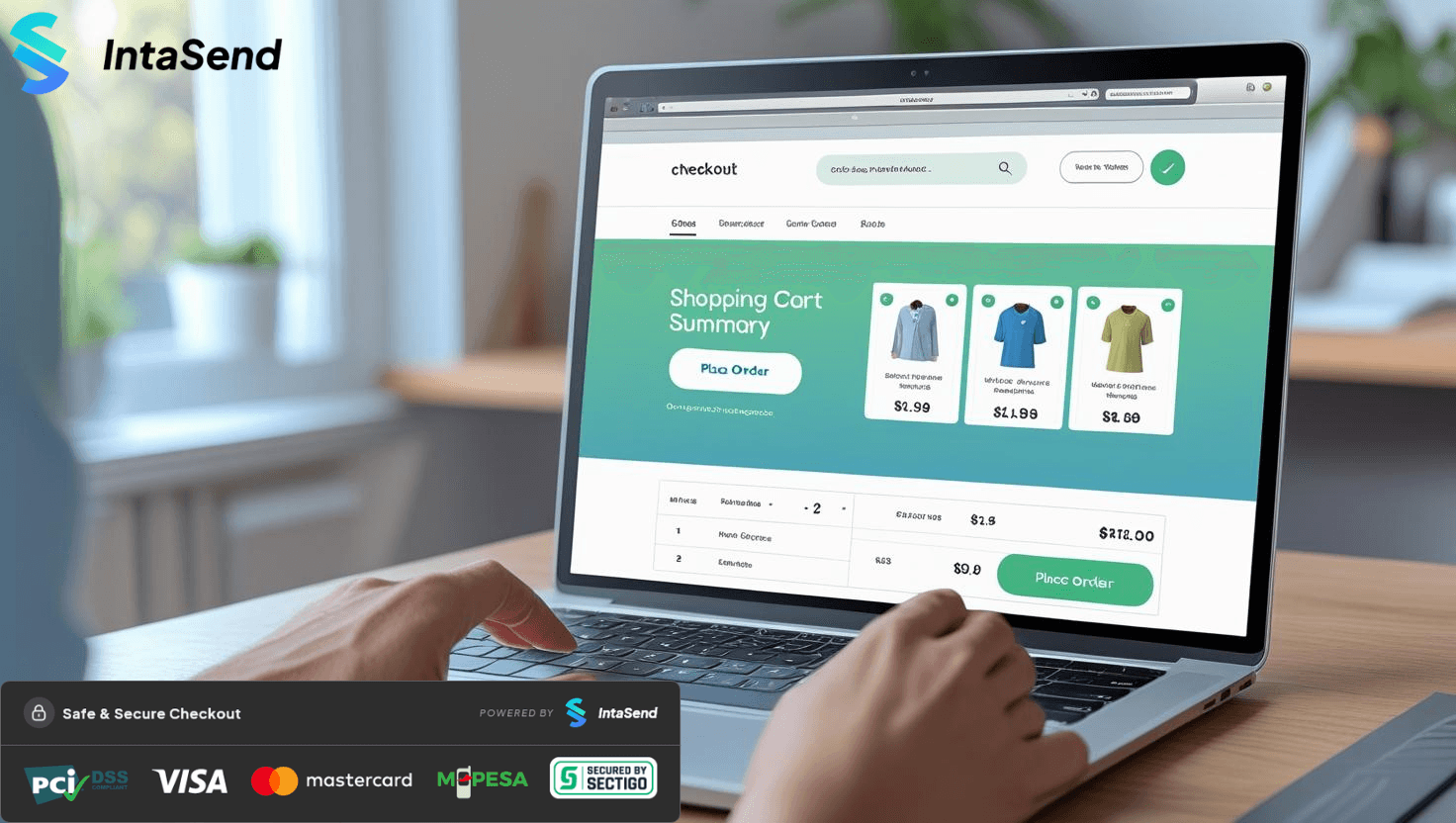
A merchant payment portal is the backbone of modern business transactions. Whether you're accepting customer payments or processing bulk disbursements, understanding payment portals helps you choose the right solution for your business needs.
If you're researching merchant payment portals, you're likely trying to solve one of these problems:
Accept payments from customers (online or in-person)
Process bulk payments to suppliers, contractors, or employees
Integrate mobile money like M-Pesa
Reduce payment processing costs
This guide explains what merchant payment portals are, how they differ from payment gateways, and modern alternatives—particularly for businesses in Kenya and East Africa.
What is a Merchant Payment Portal?
A merchant payment portal is a digital platform that allows businesses to accept, process, and manage payments from customers. Traditional merchant portals focus primarily on accepting incoming payments through credit cards, debit cards, and bank transfers.
Key Features of Merchant Payment Portals:
Payment Acceptance:
Credit and debit card processing
Online payment forms
Point-of-sale (POS) integration
Recurring billing capabilities
Transaction Management:
Real-time transaction monitoring
Payment receipts and invoicing
Settlement tracking
Transaction history and reporting
Security & Compliance:
PCI DSS compliance for card data
Fraud detection and prevention
3D Secure authentication
Modern businesses need more than just payment acceptance. They need mobile money integration (M-Pesa), outbound payment capabilities, API access, and simplified setup without lengthy merchant account applications.
Merchant Payment Processing Companies: What You Need to Know
Merchant payment processing companies provide the infrastructure for businesses to accept electronic payments.
How Merchant Payment Processing Works
When a customer makes a payment, multiple parties are involved:
Customer initiates payment
Payment Gateway securely transmits payment data
Payment Processor routes the transaction
Card Network (Visa, Mastercard) authorizes
Issuing Bank approves or declines
Acquiring Bank receives the funds
Merchant Account holds funds temporarily
Business Bank Account receives final settlement
Settlement timelines vary by provider and payment method—typically ranging from same-day to several business days.
Types of Merchant Payment Processing Companies
Traditional Payment Processors: Examples: First Data, WorldPay, Elavon
Established infrastructure
Often require lengthy setup and contracts
Higher fees but robust support
Payment Service Providers (PSPs): Examples: Stripe, PayPal, Square
Simplified onboarding (no separate merchant account needed)
Faster setup, often instant approval
Transparent pricing
Regional Payment Platforms: Examples: IntaSend (Kenya/East Africa), Paystack (West Africa), Flutterwave (Pan-African)
Local payment method integration (M-Pesa, mobile money)
Regional compliance understanding
Local currency support
Choosing the Right Provider
Consider these factors:
Payment Methods: Do they support M-Pesa (essential for Kenya), cards, and other methods your customers use?
Fee Structure: Transaction fees, monthly fees, currency conversion fees.
Settlement Speed: How quickly you receive funds impacts cash flow.
Integration: Pre-built plugins for Shopify, WooCommerce, or API documentation quality.
Read more: Payment Gateway with Best Reviews in Kenya & East Africa
Merchant Account vs Payment Gateway: Understanding the Difference
This is a common source of confusion. Let's clarify:
What is a Merchant Account?
A merchant account is a bank account that holds funds from card transactions before they're transferred to your business bank account.
Key characteristics:
Required for accepting credit/debit card payments
Holds funds temporarily during settlement
Subject to underwriting and approval
Setup can take days to weeks
What is a Payment Gateway?
A payment gateway is the technology that securely transmits payment information between your customer and the payment processor.
Key characteristics:
Software/API that facilitates transactions
Encrypts sensitive payment data
Provides the checkout interface
Returns approval/decline status in real-time
Key Differences
Feature | Merchant Account | Payment Gateway |
|---|---|---|
Function | Holds funds temporarily | Transmits payment data |
Visibility | Backend | Frontend (customer sees) |
Setup time | Days to weeks | Minutes to hours |
Required for | Card settlement | Transaction processing |
Do You Need Both?
Traditional approach: Yes, separate applications for each.
Modern PSP approach: No, it's bundled—single application, one contract, simpler setup.
Read more: What is a Payment Gateway?
M-Pesa Merchant Payment Portal: Kenya's Mobile Money Solution
For businesses operating in Kenya, M-Pesa is essential—processing more transactions than all card payments combined.
What is the M-Pesa Merchant Payment Portal?
The M-Pesa merchant payment portal refers to Safaricom's platform where businesses manage M-Pesa transactions, view reports, and reconcile payments.
Types of M-Pesa Business Solutions
M-Pesa Paybill:
Customers manually send money to your Paybill number
No integration required
Good for: Small businesses, basic collection
M-Pesa Till Number:
For in-person payments
QR code scanning available
Good for: Retail shops
M-Pesa STK Push (API Integration):
Automated payment initiation
Customer receives prompt on phone
Instant confirmation to your system
Good for: E-commerce, subscriptions
M-Pesa B2B/B2C:
Send bulk payments to suppliers (B2B)
Pay salaries, refunds, commissions (B2C)
Good for: Payroll, disbursements
Challenges with Direct M-Pesa Integration
Requires developer expertise
Paybill application takes weeks
Security certificate management
IP whitelisting requirements
Reconciliation complexity
Simplified M-Pesa Integration
Modern payment platforms provide ready-made M-Pesa integration:
What platforms like IntaSend offer:
Pre-built M-Pesa STK Push API
No Paybill application needed
M-Pesa B2C for bulk payments
Built-in reconciliation
Start accepting payments immediately
Read our technical guide: M-Pesa API Integration Guide
Modern Payment Solutions for African Businesses
Traditional merchant payment portals were designed for Western card-based economies. African businesses need:
Key Requirements
1. Mobile Money Integration
M-Pesa in Kenya (most widely used)
Airtel Money across East Africa
2. Multi-Directional Payment Flows
Collecting from customers
Paying suppliers and contractors
Processing payroll
Sending refunds
3. E-commerce Platform Integration
Shopify plugins
WooCommerce extensions
Easy setup without extensive development
4. Transparent Pricing
Clear fee structure
No hidden charges
How IntaSend Addresses These Needs
IntaSend is a payment gateway and processing platform designed for African businesses.
Payment Collection:
M-Pesa STK Push integration via API
Card payments (Visa, Mastercard, Apple Pay, Google Pay)
Payment links (no-code requests via WhatsApp/email)
Shopify and WooCommerce plugins
Business Payments (Disbursements):
M-Pesa B2C (bulk mobile wallet payments)
Bank transfers to suppliers
Salary disbursements
Bulk refunds
Why Businesses Choose IntaSend:
M-Pesa Without Complexity:
No Paybill application needed
Use IntaSend's M-Pesa infrastructure
STK Push integration simplified
E-commerce Ready:
Pre-built Shopify integration
WooCommerce plugin available
No extensive development needed
Complete Solution:
Accept and send payments
One platform for both directions
Unified reporting
Transparent Pricing:
No monthly fees
Pay per transaction only
Clear fee structure
Developer-Friendly:
Well-documented APIs
Local Support:
Kenya-based team
WhatsApp support available
Use Cases
E-commerce: Install Shopify/WooCommerce plugin, accept M-Pesa and cards immediately. Learn more
SaaS Companies: Automate recurring M-Pesa subscriptions via API. Learn more
Marketplaces: Collect from clients, pay freelancers in bulk via M-Pesa B2C.
NGOs: Collect donations, disburse to beneficiaries. Learn more
Content Creators: Sell courses using payment links accepting M-Pesa and cards.
Getting Started
Step 1: Assess Your Needs
Incoming payments: What methods do customers use? Need recurring billing? E-commerce integration?
Outgoing payments: Pay suppliers/employees? How often? Bulk or individual?
Step 2: Choose Your Solution
Traditional merchant portal if:
Card-only processing
Complex requirements
Comfortable with lengthy setup
Modern platform like IntaSend if:
Need M-Pesa integration
Want Shopify/WooCommerce plugins
Need collection and disbursements
Operate in Kenya/East Africa
Step 3: Test and Launch
Test all payment flows
Start with controlled rollout
Monitor and optimize
Frequently Asked Questions
What's the difference between a merchant payment portal and a payment gateway?
A merchant payment portal is a comprehensive platform (like Safaricom's M-Pesa portal) with transaction management and reporting. A payment gateway transmits payment data securely. Modern platforms like IntaSend provide gateway functionality with additional features.
Do I need my own Paybill to accept M-Pesa?
No. Platforms like IntaSend let you accept M-Pesa using their infrastructure via STK Push without your own Paybill.
Can I integrate M-Pesa into my Shopify store?
Yes. IntaSend provides a Shopify integration for M-Pesa and card payments.
How much do merchant payment processing companies charge?
Fees vary by provider and payment method. IntaSend offers transparent pricing with no monthly fees—you only pay per transaction. Check the pricing page for current rates.
Can I use one platform for collecting and disbursing payments?
Yes. IntaSend supports both—accept from customers (M-Pesa, cards) and send bulk payments to suppliers/employees.
What's the best payment solution for Kenyan e-commerce?
For Kenya, prioritize solutions with strong M-Pesa integration, WooCommerce/Shopify plugins, transparent pricing, and local support. IntaSend provides all of these.
How long does payment settlement take?
Settlement timelines vary by provider and payment method. Check with your specific payment provider for their settlement schedule.
Do I need technical knowledge to integrate payment processing?
Shopify and WooCommerce plugins require no coding—just install and configure. Custom integrations using APIs require developer expertise, but IntaSend provides well-documented APIs and code examples.
Ready to Simplify Your Payment Processing?
IntaSend offers:
M-Pesa STK Push (no Paybill needed)
Shopify and WooCommerce plugins
Card payments (Visa, Mastercard, Apple Pay, Google Pay)
Bulk disbursements
Developer APIs with sandbox
No monthly fees
Local Kenya support
Sign Up Free | View Pricing | API Docs | Contact Sales
Support: WhatsApp +254 711 082 947 | Email: support@intasend.com
Related Resources
Integration Guides:
Business Solutions:
Developer Resources: